Department Academic Programs
Curriculum profiles, objectives, requirements, and professional career pathways
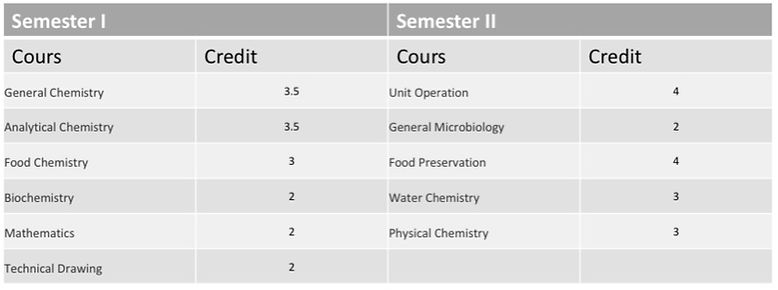
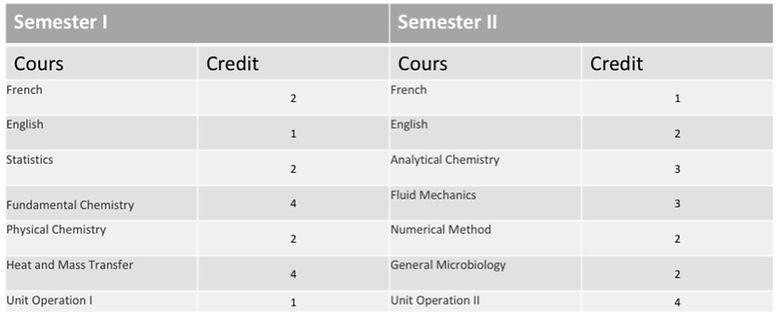
Food Processing and Analysis Engineering
1. General Information
The rise of small and medium-sized enterprises (SMEs) and food processing factories highlights the growing demand for skilled processing and quality analysis technicians capable of working in the food processing sector.
The Associate Degree in Food Processing and Analysis Engineering trains students by focusing primarily on processing agricultural products into food products, inspecting the quality of raw materials and finished products, and ensuring food safety.
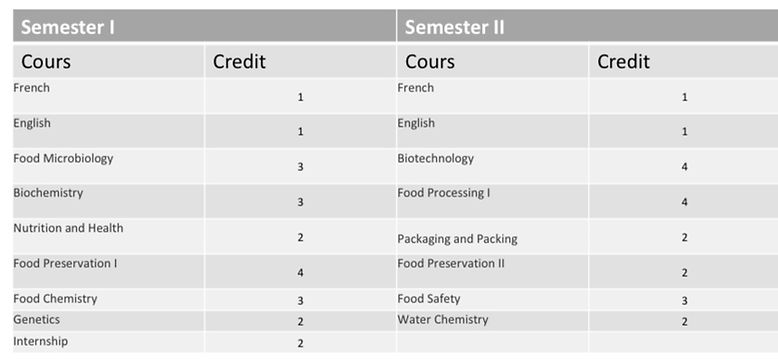
Duration & Credits: 2 years / minimum 60 credits.
2. Orientation Subjects & Requirements
Orientation Subjects
Foundation in Mathematics, Physics, and Chemistry.
Admission
High School Diploma required for enrollment.
Graduation
Complete all courses, undertake an internship (minimum 3 months in Year 2, Semester 2), write, and defend a thesis.
3. Acquired Knowledge & Skills
Graduates will acquire hands-on competencies in:
- Applying fundamentals of measurement and calibration in the laboratory.
- Inspecting raw materials, processing ingredients, and packaging quality.
- Applying the basics of microbiological analysis.
- Maintaining food safety and hygiene standards across the agri-food supply chain.
- Operating and maintaining food processing equipment.
- Applying food preservation and processing techniques.
- Preserving the nutritional quality of raw materials and finished products.
4. Career Opportunities
- Raw material and food product quality control inspector in laboratories.
- Food quality inspector in food and beverage processing plants and enterprises.
- Food product processing specialist.
- Food processing technician in food and beverage processing plants and enterprises.
- Quality assurance, hygiene implementation, and food safety standards systems specialist (GMP/GHP).
Food Science and Technology (FST)
1. General Information
The Food Science and Technology (FST) program was established in 1986. Over the past decades, it has expanded through national and international collaborations—receiving notable support from the Ministry of Education and Sports, European Union, Government of France, ARES, ADB, and JICA.
2. Mission
- Produce professional human resources in food science and technology.
- Promote lifelong learning for students.
- Increase the visibility of the faculty through student excellence, research collaboration, and active social engagement.
3. Program Educational Objectives (PEOs)
- PEO 1: Produce qualified engineers with professional technical expertise in food science and technology to satisfy domestic and international market needs.
- PEO 2: Produce lifelong learners committed to continuous improvement and innovative thinking within the domain.
- PEO 3: Prepare researchers capable of conducting advanced scientific research and pursuing post-graduate studies.
- PEO 4: Foster an entrepreneurial mindset to stimulate job creation and ventures in agro-food and related industries.
4. Program Learning Outcomes (PLOs)
- PLO1: Apply knowledge of food chemistry and microbiology in processing and manufacturing; formulate practical ideas for new product development, sensory analysis, and quality management.
- PLO2: Design products and engineering solutions tailored to industrial and societal needs.
- PLO3: Operate analytical instruments and food processing machinery, utilizing data interpretation tools for engineering problem-solving.
- PLO4: Function effectively in multidisciplinary teams, exhibiting strategic leadership within collaborative, inclusive settings.
- PLO5: Identify market opportunities and construct viable business models in the agro-food domain.
- PLO6: Apply moral principles, discipline, and professional ethics adhering to industry regulations and societal norms.
- PLO7: Demonstrate civic responsibility and accountability towards sustainability and environmental protection.
- PLO8: Communicate effectively in both technical and non-technical registers.
- PLO9: Integrate statistical and mathematical tools to evaluate and interpret food process data for informed decision-making.
- PLO10: Utilize modern digital tools and information technologies for effective technical communication and data collection.
5. Career Opportunities
- Raw material and food product quality control inspector.
- Food and beverage quality inspector in industrial processing plants.
- Food product research and development (R&D) specialist.
- Quality assurance, hygiene implementation, and food safety standards systems specialist (GMP/GHP).
- Technical sales expert in the food and beverage sector.
- Entrepreneur in food and beverage manufacturing.
6. Orientation Subjects & Requirements
Orientation Subjects
Strong foundation in Mathematics, Physics, Chemistry, and Biology.
Admission
High School Diploma, passing score on the entrance examination, and completion of foundation year studies.
Graduation
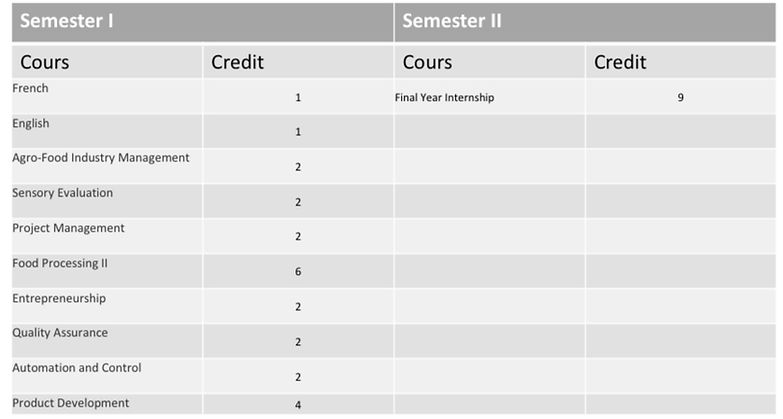
Completion of all courses, 1-month industrial attachment (end of Year 3), minimum 3-month final-year internship, and successful thesis defense.
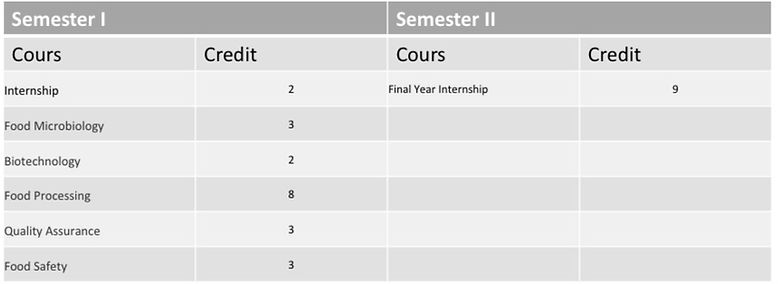
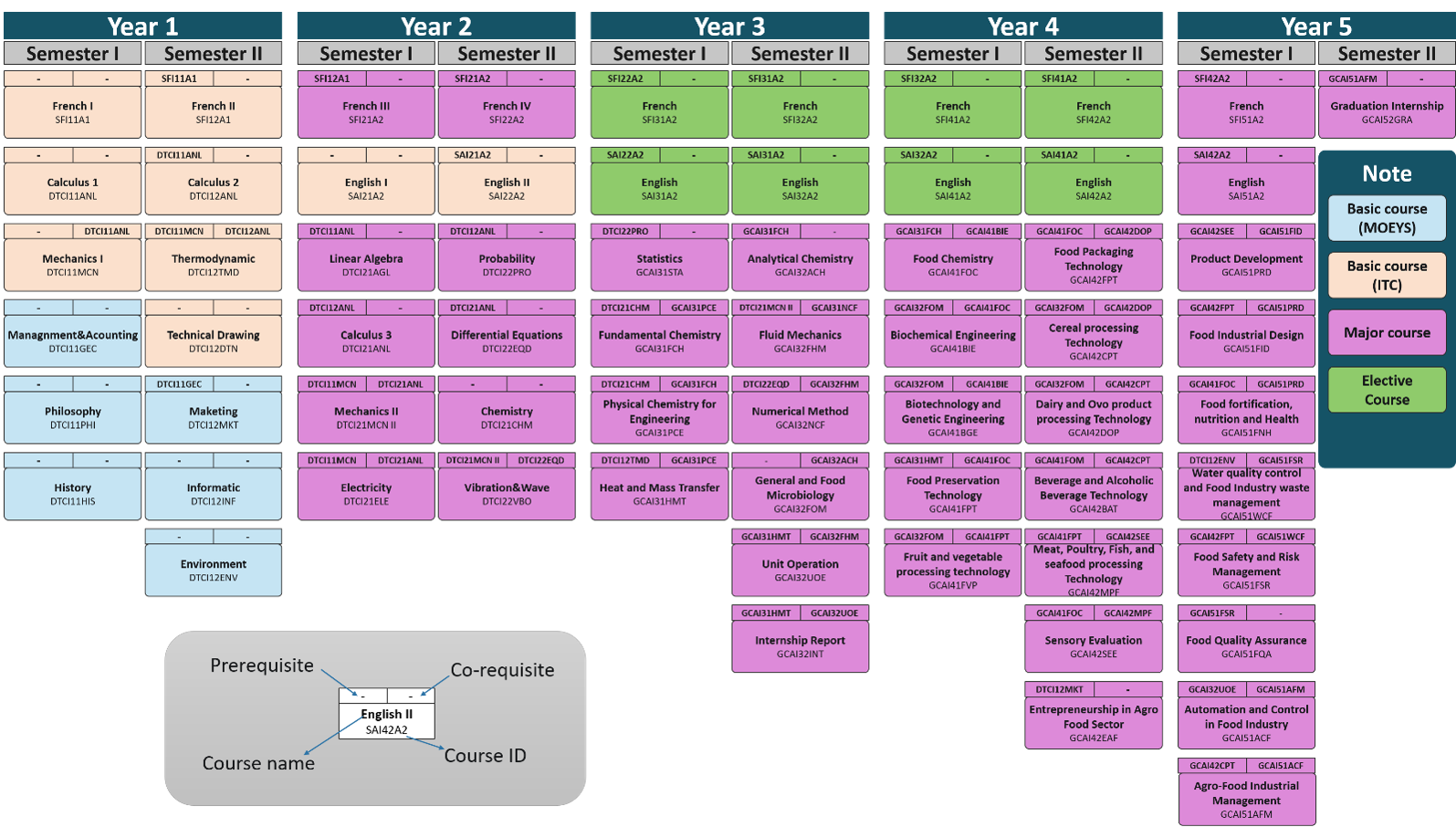
7. Program Curriculum
Chemical Engineering (ChE)
1. Vision & Mission
Vision: To lead industrial transformation by training ethical, innovative chemical engineers who drive sustainable growth and resilient manufacturing.
Mission:
- Deliver chemical industry-relevant education with strong practical and analytical foundations.
- Promote ethical, sustainable, and interdisciplinary engineering practices.
- Foster lifelong learning and professional growth for evolving industrial challenges.
2. Program Educational Objectives (PEOs)
- PEO 1: Produce qualified engineers with professional technical expertise in chemical engineering to meet market needs nationally and internationally.
- PEO 2: Produce lifelong learners who engage in continuous learning and innovative thinking that contribute significantly to the chemical engineering domain.
- PEO 3: Produce researchers who can grasp advanced research and pursue post-graduate studies in chemical engineering.
- PEO 4: Produce an entrepreneurial mindset in chemical engineering or other sectors for creating new employment opportunities.
3. Program Learning Outcomes (PLOs)
- PLO1: Demonstrate comprehensive chemical engineering knowledge and technical competence for evaluating and optimizing industrial and research processes.
- PLO2: Apply analytical and critical thinking to diagnose, model, and optimize processes for safe and sustainable solutions.
- PLO3: Demonstrate proficiency in operating laboratory and unit-operation equipment under strict safety protocols with precise data acquisition.
- PLO4: Exhibit interpersonal leadership and team collaboration across multidisciplinary project environments.
- PLO5: Identify enterprise opportunities, develop feasible engineering solutions, and assess economic and ecological impacts.
- PLO6: Practice ethical responsibility, adhering to industry standards and assessing environmental and societal impacts.
- PLO7: Demonstrate environmental accountability and social responsibility across engineering decisions.
- PLO8: Communicate technical and non-technical information clearly across various media.
- PLO9: Apply statistical, numerical, and mathematical methods to analyze process variables and experimental data.
- PLO10: Leverage modern digital tools and computational engineering platforms for workflow execution.
4. Career Opportunities
- Manufacturing & Process Industries: Paints, plastics, polymers, rubber, paper, cement, petrochemical, pharmaceutical, and cosmetic industries.
- Agriculture & Industrial Chemicals: Fertilizer plants, agrochemical formulation, and fine chemical manufacturing.
- Quality Control & Laboratory Services: QA/QC analysis of raw materials and finished products, laboratory management, and technical analysis.
- Environmental & Waste Management: Industrial effluent treatment, hazardous and solid waste management, pollution monitoring, and emissions abatement.
- Sales & Technical Support: Technical sales engineering, instrument application specialists, and chemical supply consultants.
- Research & Development (R&D): Process design, optimization, and material research scientists.
- Education & Academia: Lecturers, instructors, and vocational trainers.
5. Orientation Subjects & Requirements
Orientation Subjects
Foundation in Mathematics, Physics, Chemistry, and Biology.
Admission
High School Diploma, passing score on the entrance examination, and completion of foundation year studies.
Graduation
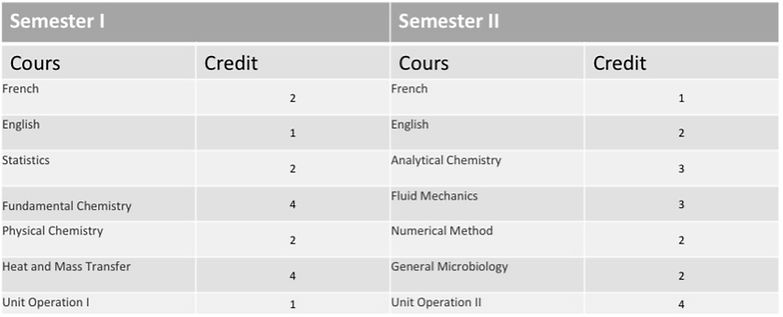
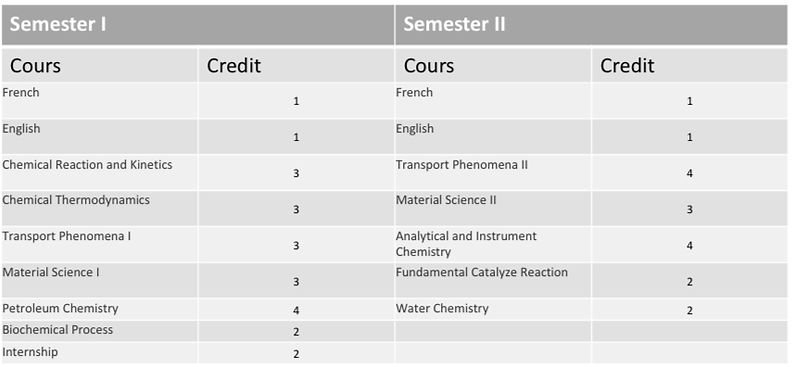
Completion of all core credits, 1-month industry attachment (end of Year 3), minimum 3-month final-year internship, and successful thesis defense.
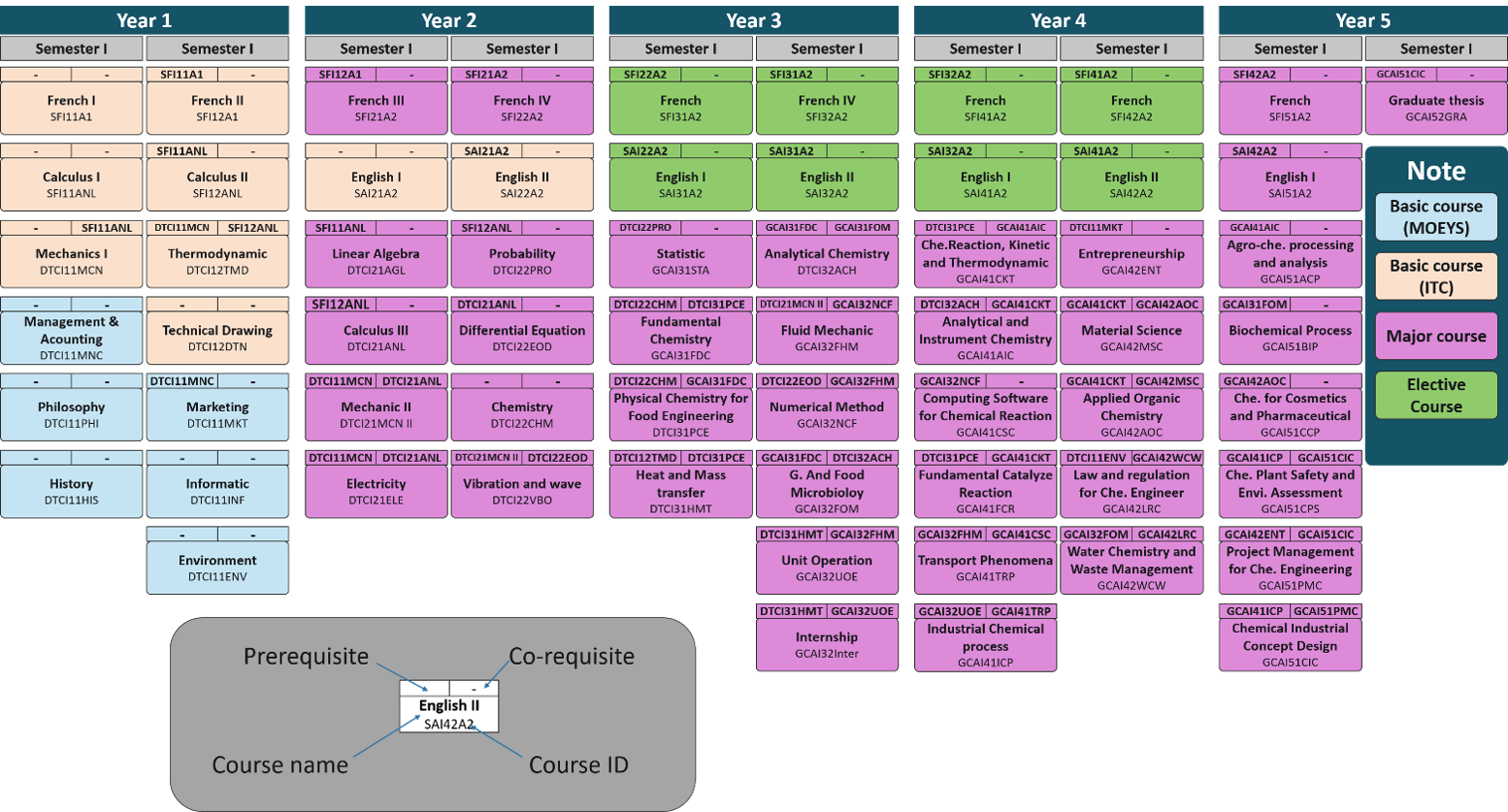
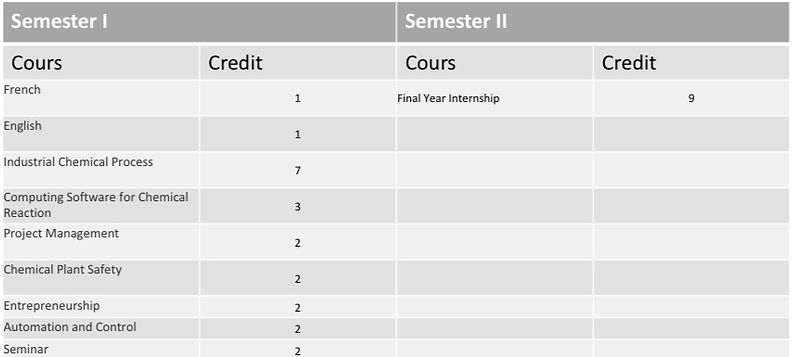
6. Program Curriculum